

Clear PET plastic cups look simple, but the choice between two cups that appear identical on a shelf can decide whether a lid seals, whether an iced drink stays presentable, and whether your packaging can be recycled.
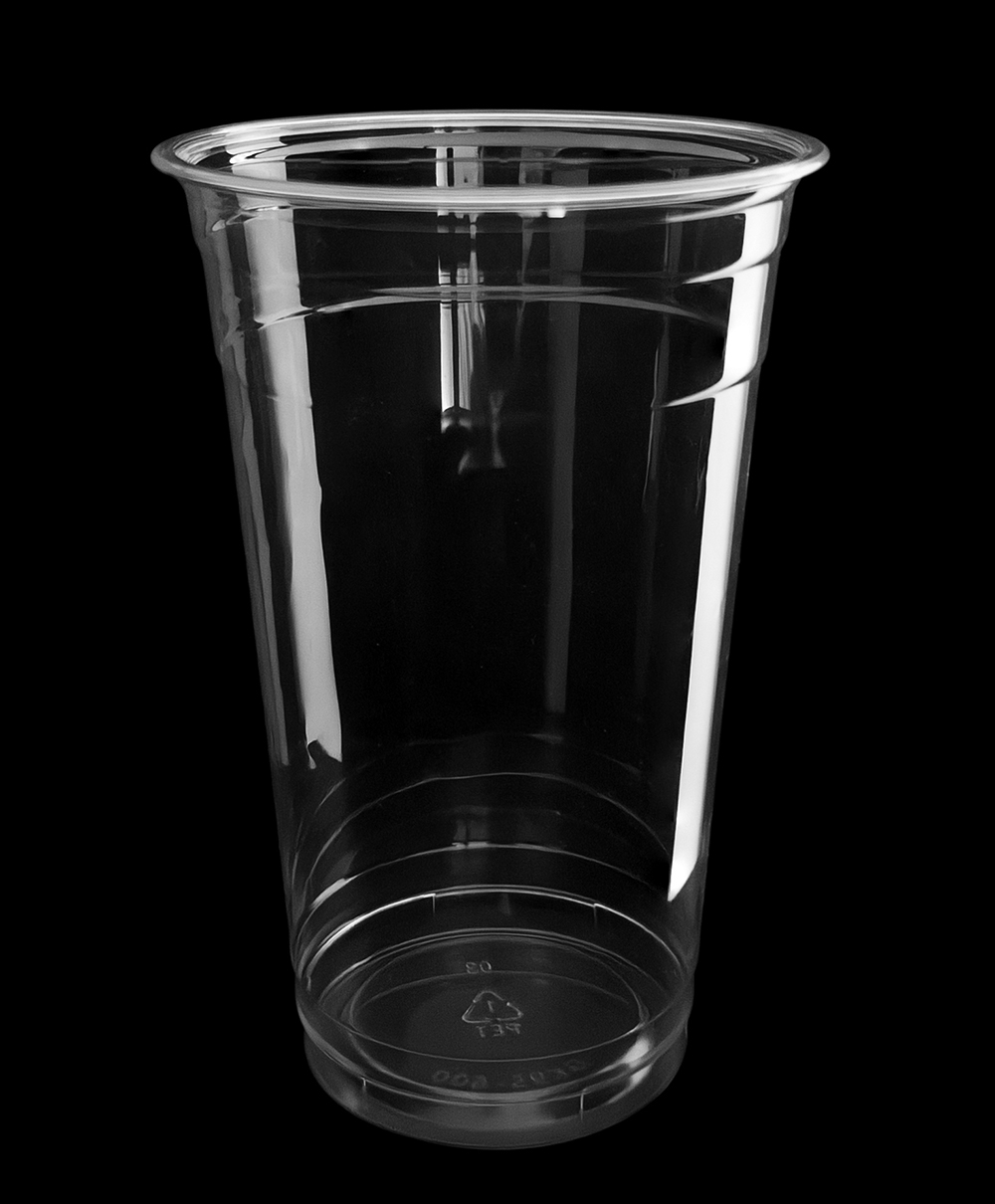 Our GK95/600C clear PET cup (600 ml). Image: Zhejiang Gaokai.
What a clear PET cup is, and why it is used for cold drinks
PET is polyethylene terephthalate, a thermoplastic polyester. It is naturally transparent, light and tough, which is why it dominates cold-beverage packaging. For a drinks business the practical benefits are:
- Clarity. Layered coffees, smoothies and fruit teas are visible, which supports impulse sales and social-media photos.
- Impact resistance. PET resists cracking far better than glass or brittle clear plastics, important for outdoor events and delivery.
- Printability. The smooth surface takes labels and printed branding well.
- Recyclability. PET carries resin identification code 1 and is among the most widely recycled packaging plastics (see the recycling section below).
The main limit is heat. PET cups are designed for cold and room-temperature drinks. Our U-shape cup page notes that PET cups typically withstand temperatures up to about 140°F (60°C), so they are not suitable for hot coffee or tea. For hot service, choose a different material.
The specifications that actually matter
1. Caliber (rim diameter), not ounces, decides lid fit
Lids seal on the rim, so a cup’s caliber, measured in millimetres, is the number to match. Two cups with the same volume can have different rims, and two cups with different volumes can share one. Our catalog covers calibers of 78, 90, 92, 95, 98, 107 and 117 mm, and our lids are numbered to match (for example, GK95 lids for 95 mm cups). Always confirm fit with a sample before a volume order, especially if you use automated lidding or sealing equipment.
2. Weight and wall stiffness
Cup weight is a quick proxy for wall thickness and stiffness. Compare cups by grams per 100 ml rather than raw weight, because a larger cup is naturally heavier. Too light and a cup can feel flimsy when full of ice; too heavy and you pay for resin you do not need. Consistent weight from batch to batch matters as much as the number itself, because it signals stable sheet and thermoforming control.
3. Base diameter and height
A wider base improves counter and cup-holder stability, while height affects how much space remains under a dome lid for cream or toppings. Check both against your cup holders, drink trays and display fixtures.
Specifications of selected Gaokai clear PET cups
All figures below are taken from the parameter tables on the product pages linked in the first column. The US fluid ounce and grams-per-100-ml columns are our own conversions.
| Item No. | Capacity | Approx. US fl oz | Weight | g per 100 ml | Caliber | Bottom | Height | Qty/Ctn | Lid series |
|---|---|---|---|---|---|---|---|---|---|
| GK95/600C | 600 ml | 20.3 | 14.2 g | 2.37 | 95.5 mm | 63.4 mm | 146.0 mm | 1,000 pcs | GK95 |
| GK90/500C | 500 ml | 16.9 | 14.0 g | 2.80 | 89.6 mm | 59.4 mm | 135.4 mm | 1,000 pcs | GK90 |
| GK90/660C | 660 ml | 22.3 | 14.0 g | 2.12 | 89.6 mm | 58.0 mm | 180.0 mm | 1,000 pcs | GK90 |
| GK90/360UC (U-shape) | 360 ml | 12.2 | 11.6 g | 3.22 | 89.6 mm | 43.0 mm | 93.0 mm | 1,000 pcs | GK90 |
Reading the table: the 90 mm family (GK90) lets you run three different volumes on one lid size, which simplifies purchasing and storage. The 660 ml cup is the tallest and lightest per millilitre, so it is the one to stress-test with heavy ice before committing. The short U-shape cup has the highest grams per 100 ml and a narrow base, which suits desserts, parfaits and tasting portions rather than tall iced drinks.
Choosing the right lid
Cup and lid should be specified together. Our PET lid range follows the same caliber numbering as the cups:
- Flat lids stack compactly and suit cold drinks with a straw, for example the GK95/LF flat lid (2.7 g, with straw slot).
- Dome lids leave headroom for cream, froth or fruit, for example the GK95/LD arch dome lid (3.8 g) and the GK90/LD dome lid (3.3 g).
- Straw-free sip lids remove the separate straw, useful where you want to cut single-use items; see the GK90/LS sip lid (3.5 g).
One caution: lid product pages sometimes describe a fit in ounces (for instance “12–16 oz”). Ounces are only a guide, because rim diameter governs the seal. Our 600 ml GK95/600C cup has a 95.5 mm rim, so the deciding factor is the 95 mm lid series, not the ounce label. Test a sample set before ordering.
Food-contact safety and what to ask your supplier
In the United States, polyethylene terephthalate food-contact articles are covered by the FDA’s indirect food additive regulation, 21 CFR 177.1630, which permits PET plastics for food contact under prescribed conditions. Other markets have their own rules, so the right approach is to ask any supplier for documentation covering your destination market rather than relying on a general “food grade” claim.
According to our certification page, Gaokai holds ISO 9001, ISO 14001, ISO 45001, ISO 22000, BRC A+, GRS and SGS certifications. Request the current certificates and test reports for the specific item you plan to buy, and ask about migration testing for your target market. Our cups are described as BPA-free; PET is not made with bisphenol A, but you should still see supporting documents for any claim that appears on your own packaging.
Recycling: what “recyclable” really depends on
PET carries resin identification code 1. The code is a technical marking administered by ASTM International under standard D7611; it identifies the polymer, not whether your local program accepts the item. The Association of Plastic Recyclers describes PET with code 1 as one of the most widely used packaging resins because of its clarity and barrier properties.
Three practical points for cup users: acceptance of cups varies by municipality, so check local rules; labels, printing and adhesives can affect recyclability, so keep decoration simple where recycling is a goal; and if you want recycled content, ask about our RPET series. For compostable alternatives, see the PLA series.
How PET cups are made, and why it affects quality
Gaokai began operating in 2021 in the Jianshan New District of Haining, inside an industrial park alongside a major PET raw-material supplier. We run 16 forming machines with a stated annual capacity of 2 billion pieces, and the plant covers sheet production, thermoforming and printing under one roof (About Us). Our Why Choose Us page lists the equipment, including imported molds and Asano cup-forming equipment. Controlling the sheet and the forming step in one place is what makes consistent wall thickness, rim roundness and weight achievable, and those are the properties that decide lid fit and stacking.
Which cup for which use
| Application | What to prioritise | Suggested starting point |
|---|---|---|
| Iced coffee and cold brew | Clarity, ice strength, straw lid | GK95/600C with GK95 flat or dome lid |
| Smoothies and shakes with toppings | Headroom, wide straw opening | GK90/500C or GK90/660C with GK90/LD dome lid |
| Desserts, parfaits, tasting portions | Short profile, visible layers | GK90/360UC U-shape cup |
| Plastic-reduction programs | No separate straw | GK90/LS straw-free sip lid |
| Hot drinks | Heat resistance | Not a PET application; PET is for cold use |
Pre-order checklist
- Confirm the caliber and the matching lid series, and test a sample set on your equipment.
- Compare grams per 100 ml, and ask for the weight tolerance.
- Fill with your heaviest ice-and-liquid load and check the walls and base.
- Request certificates and food-contact documentation for your destination market.
- Decide how the cup will be recycled and whether printing or labels will interfere.
- Check carton quantity and pallet configuration against your storage space.
Frequently asked questions
Can clear PET cups hold hot drinks?
No. They are intended for cold and room-temperature beverages, with a typical ceiling around 60°C (140°F).
Can you customise cups?
Yes. We work mainly from customer drawings or samples, and our cups take printed branding and labels. See our PET series for the standard range.
Are you a manufacturer or a trading company?
We manufacture in Haining, Zhejiang, with our own international sales team, so orders are produced and shipped by us.
How fast do you reply to inquiries?
We aim to reply within 12 hours on working days.


